Building a bottle tower for Container Gardening


When you Don't have Enough space to Grow!
If you thought that your House is Congested.
Look at the Plastic Bottle which you threw away as it was a Waste 🙁
But the Bottles can Feed your Family ,
forget about Congestion!
Build a Bottle Tower in a Small space with Easy Steps & Grow More 🌿
Bottles adds Colours to Your Life!
Yes,it will make you Happy

Materials Required :
 Bottles
Scissors 
Knife
Just Follow this Steps to Setup a Bottle Tower!

Start with a Ordinary Plastic Bottle


Cut the Bottom Part of the Bottle!


Keep a Small Hole at the Top of the Bottle for Drainage(Must need) 


Keep Another Drainage Hole to the opposite side of the First Hole!


Then add the Soil to the Bottle with out removing the Cap(Lid)
Potting Mix : Soil with Cow/Buffalo Dung or Compost
also add Ash to the Soil for Better Growth .


Don't Fill the Entire Bottle with Soil leave 3 cm Gap at Top.

Only the Bottom Bottle Should have Cap and Rest of all Bottles Need no Cap's .


Place the Second Bottle on the Top of the First Bottle.

Bottle's Need Support to Stand like a Tower.

Tie the first bottle to the Trellis for Good Support,you can do this according to your Compatibility.


The Last Second Bottle from the Top  should be Used as the Funnel.
Cut half of the Bottle without the Cap.


Drill 1 mm Hole to the Cap. 

Place the Last Bottle on the Funnel.
The Last Bottle is used to Give Water to the entire Tower.
The Water is Dripping through the Funnel.


It is the Perfect Irrigation of the Bottle Tower.


Take the Sharp Knife ,  Cut the middle of Bottle like Square with 1 side left(Cut the 3 sides of Square & Leave side)


Push that part to plant like veggies & herbs


Plant the Vegetables or Herbs which the Bottle is Capable of .
Don't Plant Heavy Vegetables.
That's it !
It's Done You Can Grow Anything!


In order to improve the dripping system of the Tower.
Fill the Last bottle with Sand , this will improve the Tower.
It will work like a Filter, the toxic things in impure Water cannot go via sand.
All the toxic materials are left in sand.


Credits to Willem Van Cotthem!


Read Also :

Everything About Tomatoes!


When it comes to tomatoes, it is clear that people love them. Tomatoes are the fourth-most-consumed fresh vegetable, and the average American actually consumes nearly 100 pounds of tomatoes per year. Yet this is not a large amount compared with Egypt and Greece, where eating more than 200 pounds per year is average. However, the United States is the second-largest global tomato grower, producing more than $2.5 billion worth annually.

tomato-01
Images courtesy of www.fix.com
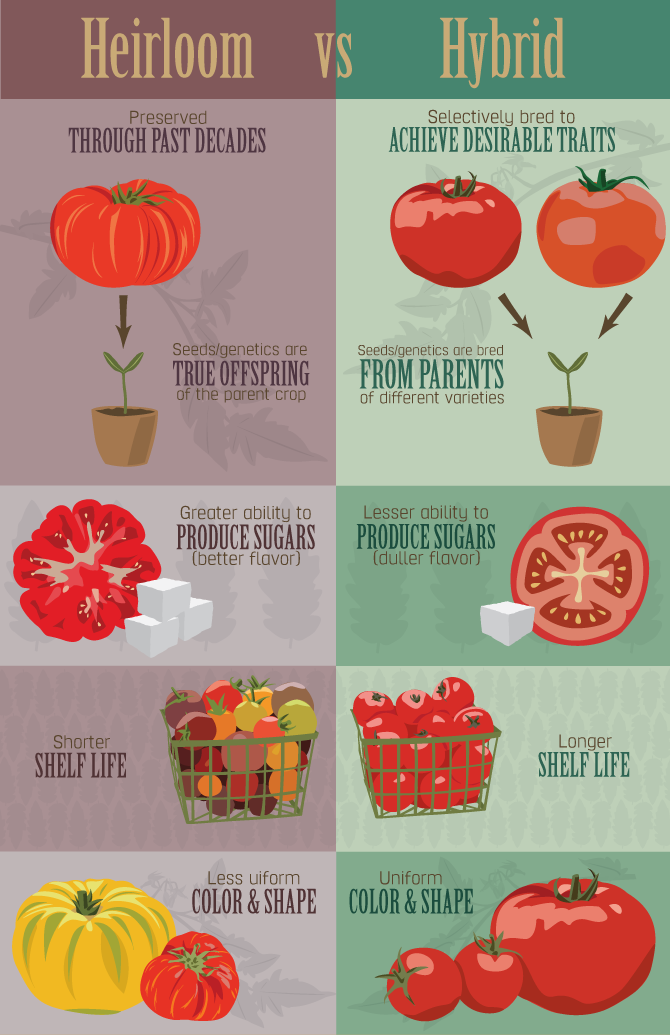
Every vegetable grower knows that the flavor of a homegrown tomato is so superior to store-bought that any comparison is in name only. But which tomato is the best for your garden? Here I will discuss the attributes to look for when buying tomato seeds or starts. First, let’s make a quick distinction between the majority of tomatoes found in stores, hybrids, and what I recommend you give a whirl at home, heirlooms. For a complete list of gardening health benefits, check out this article.

Hardiness

If your main concerns are disease resistance and high yields, then of course, look to some of the wonderful hybrids developed with those qualities. Powdery mildew, the various types of wilt, and blight can devastate a tomato crop; if they can be avoided it is wise to do so. Many homegrown hybrid tomatoes are still significantly better than what you would find at the grocery store. Many are not only disease-resistant, but are also bred to be quite prolific. Furthermore, they are ready sooner. Early Girl and 4th of July are two cultivars that will get you some homegrown tomatoes earlier in the season. So if you are looking for hardiness, hybrid varieties will be much more vigorous, hands down.
Taste
Perhaps it is taste that is your top priority. In that case, most gardeners would agree that heirlooms far surpass their hybrid counterparts. Which cultivars have the best flavor depends on your climate and growing conditions, especially your soil and rainfall. Still, there are particular tomato varieties that receive the most favorable mentions from home growers.

tomato-02
Images courtesy of www.fix.com
In the Beefsteak category you will often hear the names Brandywine, Black Krim, Mortgage Lifter and Cherokee Purple. We have personally grown all of these, and if forced to choose it would be difficult. Okay, it would be impossible: they are all amazing!
My dad had always raved about the virtues of the hybrid Big Boy tomato: one slice was all you needed for a sandwich. That was until he tasted an heirloom Black Krim. Still one slice, but oh so much better flavor. Also, if for no other reason than the history of how the Mortgage Lifter came to be, you should try them at least once (Marshall Byles bred the heirloom cultivar during the Great Depression, paying off his mortgage with the profits).
The Sauce
Are we talking sauce and salsas? Then it is the Paste or Plum tomatoes you would be looking at. Plum tomatoes are classified as ‘Indeterminate’ tomatoes. Indeterminate tomatoes, whether hybrid or heirloom, produce fruit multiple times over the growing season until frost kills the plant. Indeterminates are great for canning and making sauces. Indeterminates need good staking, often growing north of 6 feet tall. This is compared with determinate tomatoes, which produce less fruit, but over a longer single period. Determinates, also known as bush tomatoes, mature and produce their fruit all at once, over a 1-3 week period, before the plant dies.
Here again there are a few varieties that are mentioned more than others. Roma might seem obvious; San Marzano is both delicious and meaty, and Amish Paste a wonderful choice especially for the northern regions.

tomato-03
Images courtesy of www.fix.com
The Cherry
Last and least (size-wise) are the snacking tomatoes, or cherry types. Black Cherry is a delightful heirloom that is so delicious to just grab and enjoy still warm from the vine. There are many others that gardeners favor, but in this category, there is just one hybrid that stands out: our personal favorite, Sungold. To be honest we have found few of the fruit actually make it into the house, they are just that good. And isn’t snacking on warm tomatoes while gardening the most wonderful perk?
These recommended varieties are all subject to your specific preferences. Whether you want saucy plum tomatoes, dense heirloom varieties for flavor, or the hardiness of hybrids, your homegrown tomatoes will undoubtedly be amazing.

Images courtesy of www.fix.com
Jeanne Hugenbruch is a Penn State Master Gardener with 30 years experience growing edibles. She is a former restaurant owner and has been published in Horticulture magazine and also writes for www.fix.com
View Jeanne Hugenbruch’s Author Profile

How to attract the Earth Worms ?


How to Use Corn Powder to Attract Earthworms to Your Garden!


We know that Earth Worms will be helpful to the Field that the Earth Worms Makes the Un-fertile land To the Fertile Land.

There are  many ways to attract the Earth Worms to the Field for the Healthy Soil.

Let's see the Ways to attract the EarthWorms.

The Best method to attract the Earth Worms is by using the Powder of the Black Gram,Green Gram,Bengal Gram,Corn,Jaggery .

Sprinkle the Powder listed above along with the Buffalo / Cow Dung or urine.


THIS METHOD IS THE TRUSTED BECAUSE MOST OF THE INDIAN NATURAL FARMING FOLLOWERS ARE IMPLEMENTING THIS GETTING THE EXTRAORDINARY RESULTS.


ANOTHER METHOD TO ATTRACT THE EARTHWORMS!

Just add the Food Waste to the soil that will help to your garden soil fresh and regenerating nutrients in the soil .
By Doing this the Soil will get developing in the Fertile and worms are Developed much more which makes the soil Rich in Nutrients .
So , that the Crops or Vegetables you Grown in the Field will be easily grown and less affect to the Viruses and the Diseases.

or

Sprinkle some Corn Powder on the Field that to cover Some Land.
Earth Worms were attracted to the above earth due to the Corn Meal.

or 

Mix the Corn Powder into the top 2 inches of Garden Soil and Water the Area which the Corn Powder is Mixed.

Avoid too Much wet because it causes the worms not to come out.

Observe the Soil because the Dry Soil dries out the earth worms.

Wait for Some days that bacteria should develop to attract the EarthWorms to eat the Corn Powder.

Every  weeks add the Corn Powder to the Soil so that it will become easy for Earth Worms to Come out and 
Eat the Corn meal and making the Soil Fertile .

If you are not seeing much  activity add the worms to the soil from someone of who raises the Earth Worms 
or
those that you have dug up for yourself from the alternative location.

Better is to try the above two methods to make your Garden Healthy by attracting the Earth Worms in a Easiest Way.

Rain water harvesting !


Rooftop rain water harvesting structure is a unique system .

This system will be allowed to enter into filter media of water harvesting structure.

The clear water /filtered rain water is allowed to occupy or fill the bottom chamber.

Bottom chambers bottom surface is made with porous concrete (porous concrete means concrete without sand that means metal+Concrete+water)


Below are the three ways of harvesting with single structure.

A.The filtered rain water from bottom chamber is allowed to enter into ground through porous concrete surface for recharging.

B.To enter into our existing bore well through PVC pipe which is fixed from chamber bottom to bore well for fast and heavy recharging.

C.To enter into our existing sump for collection and storage through fixing PVC pipe from chamber bottom to sump.


First of All Plot your House Model and Observe the Pipeline attached to the Roof.

That either it is Connected to the Drainage or not.

If the Roof Pipeline is connected to the drainage , remove the pipeline from that drainage and tie the Cotton Cloth to the end of the Pipeline and arrange the Drum or Bucket to collect the Rain Water Easily.

 You Can also Watch the Similar Video in  English


Growing Carrots in Your Garden with High Yield!


Carrots are a popular root vegetable that are easy to grow in sandy soil. They are resistant to 
most pests and diseases, and are a good late season crop that can tolerate frost.

Usually orange in colour, though purple, black, red, white, and yellow varieties exist.

It has a crisp texture when fresh. The most commonly eaten part of a carrot is ataproot, although the 
greens are sometimes eaten as well. It is a domesticated form of the wild carrot Daucus carota, native 
to Europe and southwestern Asia. The domestic carrot has been selectively bred for its greatly 
enlarged and more palatable, less woody-textured edible taproot. The Food and Agriculture 
Organization of the United Nations (FAO) reports that world production of carrots and turnips (these 
plants are combined by the FAO for reporting purposes) for calendar year 2011 was almost 35.658 
million tonnes. Almost half were grown in China. Carrots are widely used in many cuisines, especially in the preparation of salads, and carrot salads are a tradition in many regional cuisines.

STEPS
  • Remove the Stones from the soil 
  • It need deeply tilled soil because the carrot goes down to grow in the ground 
  • It grows in all soils
  • Sow the seeds directly into the soil deeply but not too much 


  • Water it and then keep watering regularly 
  • Try not to use the fertilizers
  • Use Palekar Asthra's or neem oil if any disease occur 
  • Carrots grow well in the full sunlight and partially shade also
  • It will be ready for harvest in just  30 days from planting and matured carrots  harvested in 65 days.
  • Mainly it needs water and full sunlight with good fertile soil.
  • The Space between two Carrots is 3 inches , by planting the carrots like this 
You can get More Yield for Surely!


After Germination & Caring Tips

Soon after germination, carrot seedlings show a distinct demarcation between the taproot and the 
stem. The latter is thicker and lacks lateral roots. At the upper end of the stem is the seed leaf. 
The first true leaf appears about 10–15 days after germination. 


Subsequent leaves, produced from the stem nodes, are alternating(with a single leaf attached to a 
node, and the leaves growing in alternate directions) and compound, and arranged in a spiral. 
The leaf blades are pinnate. As the plant grows, the bases of the seed leaves are pushed apart. 
The stem, located just above the ground, is compressed and the internodes are not distinct. 
When the seed stalk elongates, the tip of the stem narrows and becomes pointed, extends upward, and becomes a highly branched inflorescence.
 The stems grow to 60–200 cm (20–80 in) tall.
Health Benefits of the Carrots
  • Improves the Vision who are the suffering from the Deficiency of the Eye Vision
  • It Rid out the Elements which are causing the Cancer.
  • It has Anti-aging elements who keeps you to look Younger.
  • It Prevents you from the Infections which going to bother you.
  • The Toxic things will be eliminated by the Fiber in the Carrots.
  • It Decreases the Chances of the Heart Strokes and Keeps you Healthy
  • Removes the Dead Cells from the Body and Makes you Glow
  • Dental Problems can be Rid out by this

Something About Carrot that you Don't Know

Most of the taproot consists of a pulpy outer cortex (phloem) and an inner core (xylem). High-quality carrots have a large proportion of cortex compared to core. Although a completely xylem-free carrot is not possible, some cultivars have small and deeply pigmented cores; the taproot can appear to lack a core when the colour of the cortex and core are similar in intensity. Taproots typically have a long conical shape, although cylindrical and round cultivars are available. The root diameter can range from 1 cm (0.4 in) to as much as 10 cm (4 in) at the widest part. The root length ranges from 5 to 50 cm (2.0 to 19.7 in), although most are between 10 and 25 cm (4 and 10 in).


Flower development begins when the flat meristem changes from producing leaves to an uplifted, 
conical meristem capable of producing stem elongation and an cluster of flowers. The cluster is a 
compound umbel, and each umbel contains several smaller umbels (umbellets). The first (primary) 
umbel occurs at the end of the main floral stem; smaller secondary umbels grow from the main branch,
 and these further branch into third, fourth, and even later-flowering umbels. A large, primary umbel 
can contain up to 50 umbellets, each of which may have as many as 50 flowers; subsequent umbels 
have fewer flowers. Flowers are small and white, sometimes with a light green or yellow tint. They 
consist of five petals, five stamens, and an entire calyx. The stamensusually split and the stamens fall 
off before the stigma becomes receptive to receive pollen. The stamens of the brown, male, sterile 
flowers degenerate and shrivel before the flower fully opens. In the other type of male sterile flower, 
the stamens are replaced by petals, and these petals do not fall off. A nectar-containing disc is present 
on the upper surface of the carpels.

Categories

Container Gardening

Facebook

Subscribe Us